
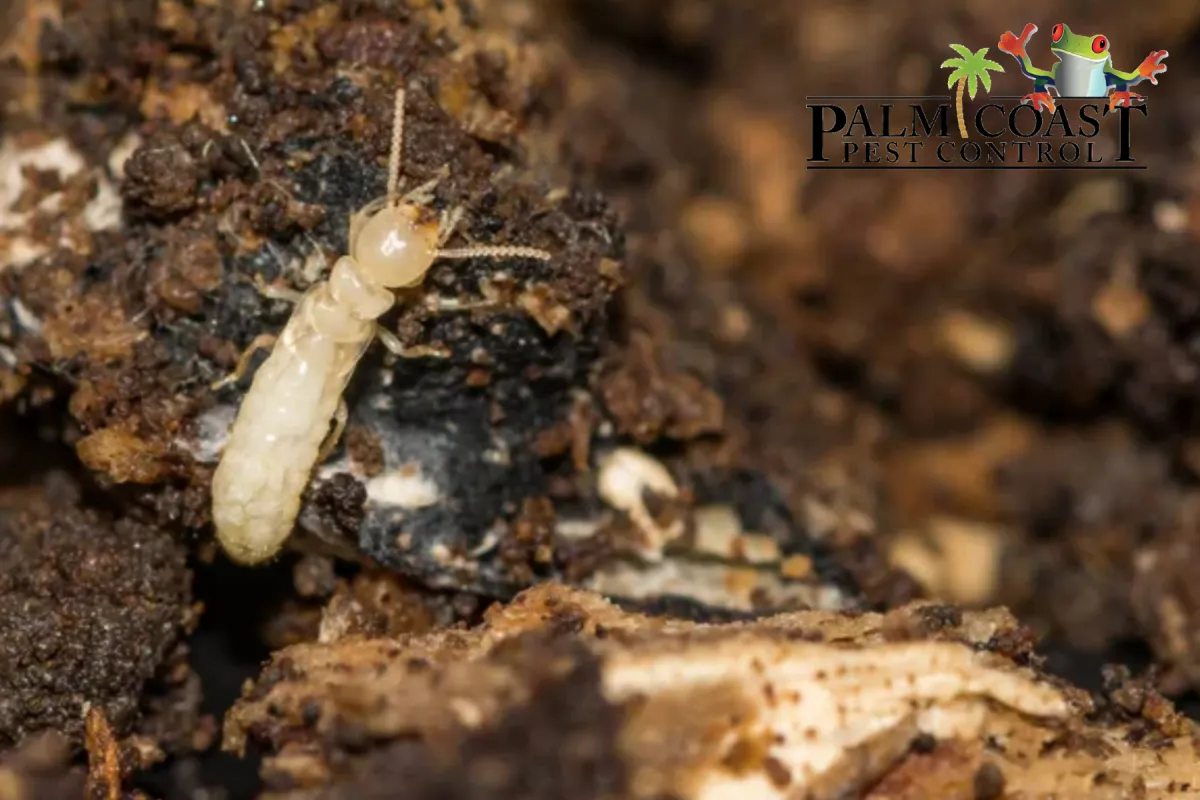
Subterranean termites reappear after a professional treatment primarily because of small gaps in the chemical barrier, soil movement from landscaping, or persistent moisture issues that attract the pests. They can also return if an established “aerial” nest exists inside your walls, allowing the colony to thrive without ever touching the treated soil at the ground level.
It is incredibly frustrating to see a termite in your home after you have already paid for a professional service. However, it is important to note that seeing a few winged termites shortly after treatment does not necessarily mean the service failed. Often, these are just “lingerers” that were already inside the walls and are now trying to find a way out toward the light.
To help you understand what you are seeing, use this table to check if you have an active colony or just a temporary leftover from the original infestation.
| Sign | Likely a “Lingerer” (Normal) | Likely a New Threat (Concern) |
| When they appear | Within 30 days of the treatment | 6 months or more after treatment |
| Physical Evidence | Dead “swarmers” near windows | Live workers inside fresh mud tubes |
| Location | Near the original entry point | In a brand-new part of the house |
| Movement | Slow, sluggish, or totally dead | Fast-moving and busy building tubes |
| Wood Damage | No new holes or shavings | New “hollow” sounds in the wood |
If you live in Florida, you know that our environment is a constant playground for bugs. During a recent site audit for pest control in North Port, FL, we found that the termites hadn’t actually “returned”; they had just been trapped inside the wall voids during the application. Because our certified termite specialists used a high-quality termiticide, the trapped pests died off within a week without causing any further structural damage.
Even a perfect liquid barrier can be broken by environmental changes. Subterranean termites are tiny, persistent, and always searching for a way in. They only need a gap as thin as a credit card to bypass a treatment. Here are the most common ways a professional barrier gets compromised.
While providing subterranean termite control, we often find that the house itself has changed since the treatment. A new patio or a repaired plumbing line can easily break the seal of a chemical barrier.
At Palm Coast Pest Control, we don’t just “spray and walk away.” We understand that protecting your home requires an ongoing, scientific approach. Our method is built on over 35 years of experience, and we treat every house as if it belonged to our own neighbor.
To prevent termites from returning, our certified termite specialists use advanced defense systems and professional treatments. This starts with a goal of eliminating the colony completely. We don’t just want to kill the termites on your wall; we want to wipe out the queen and the entire nest hidden deep underground.
We achieve this through advanced treatment applications like our non-repellent liquid treatment. Older chemicals were “repellents,” which meant termites could smell them and simply walk around them to find a gap. Our modern treatments are invisible to termites. They walk right through the treated soil, pick up the chemical on their bodies, and carry it back to the nest. This “transfer effect” ensures the whole colony is exposed, leading to a much higher success rate than DIY methods. This is why we are a trusted name for pest control in North Port.
The Myth: “Once a professional treats my soil, my home is permanently protected, and I never have to worry about termites again.”
The Reality: This is a very common misconception that leads to massive repair bills later. No liquid treatment lasts forever. Chemicals eventually break down in the soil due to heat, rain, and microbial activity. In our humid climate, a barrier might stay strong for five to eight years, but it is not a “shield for life.”
Think of your termite treatment like the brakes on your car. They work great when new, but they need to be checked regularly to ensure they are still safe. Maintaining reliable North Port pest control means having an annual inspection. We look for new “bridges,” soil movement, or moisture issues that have changed since our last visit. Expecting one treatment to last forever is a recipe for an expensive surprise.
To provide advanced defense with professional treatment systems, we focus on the technical details that keep chemicals where they belong.
Soil-Binding Affinity
This is the measure of how well the termiticide sticks to the dirt. We use products that bond tightly to the soil so they don’t wash away during a heavy Florida downpour.
The Transfer Effect
A biological process where a “donor” termite passes the chemical to a “recipient” termite through grooming and feeding. This is how our non-repellent liquid treatment reaches the queen.
Half-Life
The time it takes for a chemical to lose half its strength. We choose products with a long half-life to ensure your subterranean termite control remains effective for years.
Trenching and Rodding
These are the advanced treatment applications used to get the chemical deep into the soil. We dig a trench around the foundation and use rods to inject the liquid down to the footer of your home.
This level of precision is exactly what sets a professional apart from a “quick fix” approach. It is also why we are the preferred choice for pest control.
Q: Can I do my own subterranean termite control?
A: While you can buy products at the store, DIY termite control is very difficult. Most store-bought products are simple repellents that won’t reach the queen. Professional services use specialized tools and non-repellent chemicals that are not available to the public.
Q: Is the liquid treatment safe for my kids and pets?
A: Yes. At Palm Coast Pest Control, we prioritize child- and pet-safe, eco-friendly solutions. Once the liquid treatment has dried and bonded with the soil, it is trapped underground where your family and pets won’t come into contact with it.
Q: Why did termites swarm after my house was treated?
A: Swarming is a natural part of the termite life cycle. If they swarm shortly after treatment, they are usually just “trapped” and trying to escape. If they swarm a year or more later, it might indicate the barrier has been breached and you need a new inspection.
Q: How do I know if my treatment is still working?
A: The only way to be 100% sure is to have an annual inspection by certified termite specialists. We check for mud tubes, wood damage, and any changes in the soil that might have created a gap.
At Palm Coast Pest Control, we are professional yet neighborly. We mix deep technical know-how with friendly, down-to-earth service because we know that your home is your most important investment. With over 35 years of experience, our family-run team has faced every termite challenge Florida has to offer.
We believe in doing things the right way, using the latest, proven treatment methods and quality equipment. We conduct every inspection and quote with honesty and integrity. Our goal is to give you peace of mind and protection, the relief of knowing your home or business is safe from pests.
What sets us apart? We are your one-stop provider for pests, termites, rodents, and lawn care. You don’t have to juggle multiple companies to keep your property healthy. Plus, our services are 100% satisfaction guaranteed; if the pests don’t stay away, neither do we.
Let our family protect yours with the most reliable subterranean termite control available. We are here to help you keep your home pest-free year-round with our friendly, expert advice and reliable service! Schedule a service today!
