We’re a 2025 Nextdoor Neighborhood Faves winner! Thank you to our amazing neighbors for your support and votes. Visit our Nextdoor Business Page to see what’s new and share what you love most about our business. #NeighborhoodFaves
- Jupiter, FL
- Blog
- Pay Your Bill
- Jupiter, FL
- Blog
- Pay Your Bill
- Top Rated Local® Pest Control Specialist
Pantry Pests
Pantry pests, often referred to as “stored product pests”, are a broad category of insects that deliberately target, infest, and contaminate dried food products in homes, grocery stores, and warehouses. Unlike pests that invade your living spaces looking for a temporary meal, they can typically live, breed, and lay eggs directly inside their food source. While they do not transmit dangerous diseases, sting, or bite, they cause significant food waste and can quickly ruin a well-stocked kitchen if left unchecked. Most homeowners unknowingly bring these pests into their houses inside pre-packaged grocery items that were already contaminated at processing plants or distribution centers.
Read More
Common Pantry Pest Species
A wide variety of beetles, moths, and weevils fall under this category, but a few specific culprits are responsible for the vast majority of household kitchen infestations:
- Indian Meal Moths: The most prevalent pantry pest. While the adult moths are easily spotted flying erratically around kitchens, it is their worm-like larvae that do the damage, spinning unsightly silk webs inside cereal, flour, pet food, and dried fruit.
- Saw-Toothed Grain Beetles: Named for the tiny, saw-like projections on their sides, these small, flat, brown beetles are notorious for their ability to squeeze into incredibly tight packaging, including sealed cardboard boxes and plastic bags.
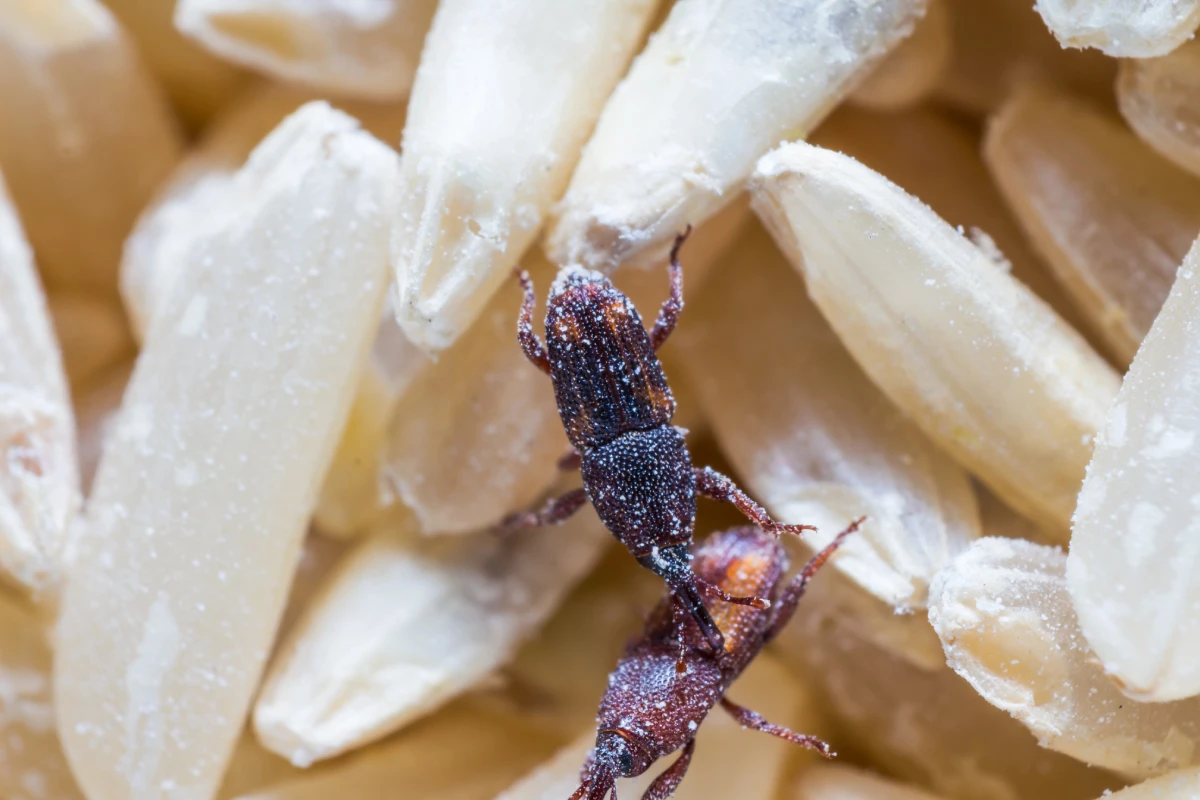
- Rice and Granary Weevils: Distinctly identified by their long, snout-like mouthparts, these tiny beetles burrow inside whole grains, such as rice, corn, and kernels, to lay their eggs, meaning the larvae feed internally before chewing their way out.
- Confused Flour Beetles: These flat, reddish-brown beetles cannot feed on whole grains but thrive in processed grain products like flour, cake mixes, and powdered milk, leaving a sharp, unpleasant odor in contaminated food.
Signs of a Pantry Pest Infestation
Because these insects are incredibly small and excellent at hiding, you might not notice them until a large population has developed. Keep an eye out for these telltale signs:
- Clumped Food or Webbing: If you notice silk-like threads or small clumps of grain in your flour, cereal, or oats, it is a definitive sign that moth larvae are actively feeding and spinning webs.
- Adult Insects Flying or Crawling: Spotting small, reddish-brown beetles crawling along pantry shelves or tiny, gray-and-brown moths resting on kitchen walls or ceilings usually indicates a nearby breeding source.
- Damaged Packaging: Unexplained tiny holes in plastic bags, cardboard boxes, or paper wrappers are clear indicators that pests have chewed their way in or out of the product. Learn more about us!
- Are You Looking For an Experienced and Local Pantry Pests Company?
Get 10% OFF Your Initial Service!
Call (561) 575-4005 or Fill out the form below so we can best help you!
Prevention and Kitchen Management
Eliminating a pantry pest infestation requires removing their access to food and disrupting their breeding cycles. You can protect your kitchen by implementing these practical storage and cleaning habits:
- Inspect Groceries at the Store: Before purchasing dried goods, carefully check the packaging for tear marks, tiny holes, or broken seals.
- Use Airtight Glass or Plastic Containers: Transfer opened boxes of flour, grains, sugar, and pet food into heavy-duty plastic, glass, or metal containers with tight-fitting lids. Pantry pests can easily chew through thin cardboard and plastic wrap, but they cannot penetrate solid barriers.
- Practice First-In, First-Out (FIFO): Rotate your dried pantry goods so that older items are used first, preventing packages from sitting forgotten in the back of shelves for months or years.
- Keep Shelves Clean: Wipe down your pantry shelves regularly. Vacuum up loose crumbs, spilled flour, and debris from corners, as even tiny amounts of food can sustain a small pest population.
Reliable, Professional, and Friendly!
What Our Customers Say
Once pantry pests spread beyond a single package, tracking down every hidden nesting site can be incredibly frustrating. Because their eggs and larvae are microscopic, simply throwing away an infested box of cereal is rarely enough to halt the cycle entirely. At Palm Coast Pest Control, we provide thorough, targeted pantry pest solutions that locate the root of the infestation and eliminate it completely. Our professional technicians inspect your storage areas, identify the exact species, and apply safe, effective treatments to clear your kitchen and protect your food supply. Contact us today to restore peace of mind to your home.
Frequently Asked Questions
How do pantry pests get into my home?
Pantry pests are commonly brought into homes through contaminated packaged foods purchased from grocery stores or warehouses. Items like flour, cereal, rice, pasta, pet food, nuts, and dried fruit may already contain eggs or larvae before you bring them home.
Are pantry pests harmful to humans?
Pantry pests do not bite, sting, or spread diseases, but they can contaminate food products with shed skins, webbing, larvae, and droppings. Consuming heavily infested food is unpleasant and unsanitary, which is why contaminated items should always be discarded.
What foods are most vulnerable to pantry pests?
Pantry pests are attracted to a wide range of dried goods, including flour, rice, cereal, grains, oats, pasta, cake mixes, spices, nuts, pet food, and dried fruits. Improperly sealed food products are especially vulnerable to infestation.
How can I prevent pantry pests from returning?
To prevent future infestations, store dried foods in airtight glass or heavy-duty plastic containers, regularly clean pantry shelves, rotate older food products first, and inspect grocery packaging for signs of damage before purchasing.
When should I call a professional for pantry pests?
If pantry pests continue appearing after cleaning and discarding contaminated food, the infestation may have spread to hidden areas or multiple products. Professional pest control services can identify the source, eliminate hidden eggs and larvae, and provide long-term protection for your kitchen and stored food.