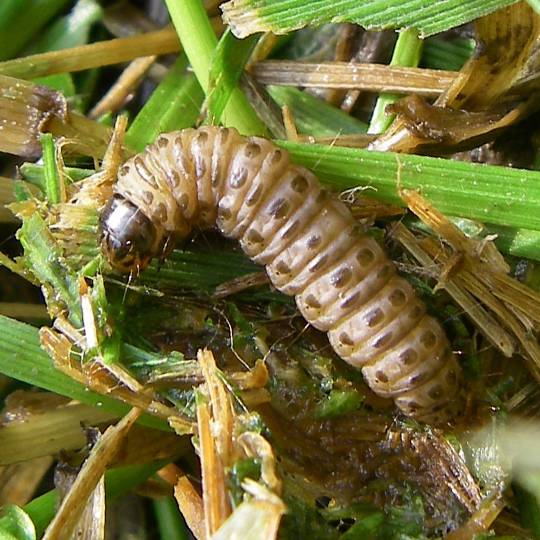
Have you ever walked on your lawn and you see moths fly out? If you have that means you have sod webworms. Sod webworms like to infest turfgrasses. The adults are referred to as lawn moths and are buff colored, about ½ to ¾ inches long with a snout like projection extending forward from the head. The sod webworm larvae are gray to tan with small dark spots on the body and brown heads. They reach ¾ to 1 inch when fully grown.
Sod webworms like to live in the thatch, just above the soil when they spin light webbing and feed on the undersides of the leaves. Damage will start as small, ragged brown spots in the turf. As feeding continues these areas become larger and may join other large dead patches of grasses. Bluegrass, bent grass, tall and fine leafed fescues, and buffalo grass is most prevalent in areas that receive plenty of direct sunlight or south facing slopes. Heavily shaded areas are seldom attacked.
Overwinter are young larvae in silk-lined tunnels near the soil surface or the thatch. They resume feeding as temperatures warm in April or early May. Early June webworms pupate in loosely woven cocoons made of silk and dirt. About 10-14 days later adult moths emerge and begin mating. Mated females fly just above the lawn surface and randomly scatter their eggs in the grass. Each female may lay several hundred eggs which hatch in a new generation of larvae within a week. Young larvae spin webs and feed until mid-summer. There are 2-3 generations per year in most areas.
Sod webworms can be very destructive lawn pests in warm season turfgrasses in the southern eastern U.S., especially on newly established sod, lawns, athletic fields, and gold courses. Larval feeding damage reduces turfgrasses aesthetics, vigor, photosynthesis and density. First sign of damage is difference in grass height in areas where larvae are feeding. In south Florida tropical sod webworm adults are present year-round with significantly higher numbers in fall.
First 4 stages feed on the upper surface of the grass blades, so the injury is often overlooked. 5th and 6th stages cause severe damage to grass by chewing entire sections of the leaf blade. Feeding occurs at night and larvae hide in the thatch during the day. Grass may recover if the infestation is not too severe, but feeding damage causes yellow and brown patches. This often leads to getting weeds.
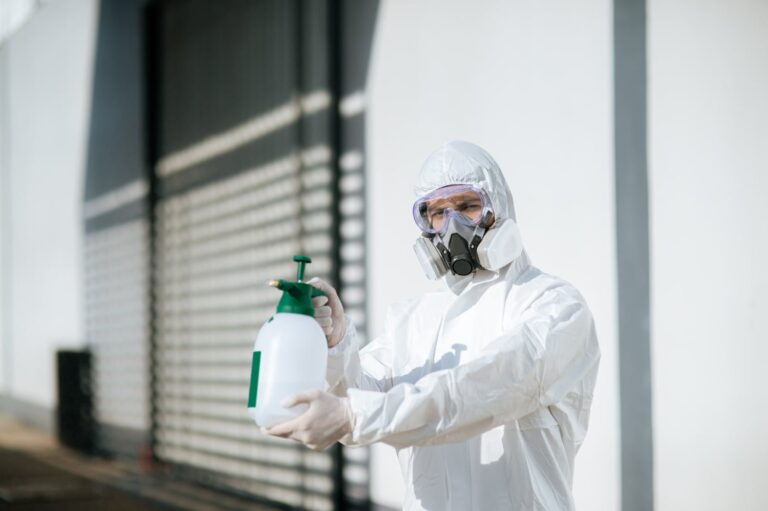
When it comes to sod webworms this is a pest that requires a professional to efficiently put the problem to an end. When it comes to service that leaves long lasting effects its time the choose the best, Palm Coast Pest!