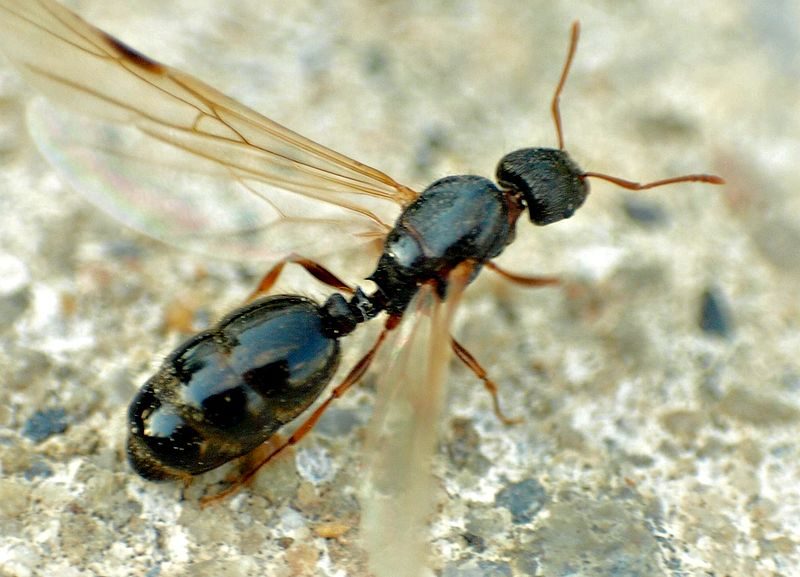
Its that time of year again, spring swarm season. There are multiples of varieties of insects you may see popping up more this time of year, but one that everyone is seeing are swarming ants with wings. I’m sure you may have seen a herd of them flying about, possibly dead in your pool. You’ll normally find them outside on a humid, warm day. If the nest is close enough indoors, it is possibly you may even see them inside. More likely you will find them outside, and they aren’t anything to be concerned about! Swarming typically lasts for one day.
All species of ants are capable of producing swarmers. They’re visibly easy to notice, but harmless. These types of ants won’t cause mounds in your yard, or even dirt piles in your driveway. They have one goal and one goal only, and that is to mate. Swarms are a temporary, natural event that is not permanent or a major problem. Most will die of starvation, dehydration or from predators. You will most likely find them dead. Just enough survive to spread the species, but you will only see them in spring to summer. The conditions have to be just right for this process to happen.
Most cases if worker ants haven’t been a problem in the home, the presence of swarmer ants inside should not be a cause of concern. Ant swarmers are not to be confused with termite swarmers, as the difference in severity is much bigger. As this time of year, also coincides with termite swarming season. You’ll notice the difference in the two because ants have pinched waists, different sized wings and bent antennas. With the ants being in three segments and termites with two you can tell the difference by their body shape. The termites also have similar sized wings and straight antennas.
Flying ants are sexual mature ants with one purpose that is to mate and expand the colony. Certain conditions must exist for them to leave the colony including: bright sunlight, low winds, high humidity and warm temperatures, preferably after a couple days of rain. These conditions happen from early spring to late summer. All males and females of all colonies in the region will simultaneously fly out to mate. Shortly after mating the male will die, having fulfilled their purpose. The fertilized female then flies in search of a nesting site. Once she finds her nest, she’ll break off her wings and never fly again. Then the new queen goes to work starting the new colony. Note that all males, half of the swarmers, will die. Also, not all of the flying queens will be able to successfully start a new colony. Everything has to be perfect from location, genetics, lack of predators, weather and just a little luck for a swarmer to be successful. With that all in mind don’t worry if you see these pests hanging around your home, its only temporary!