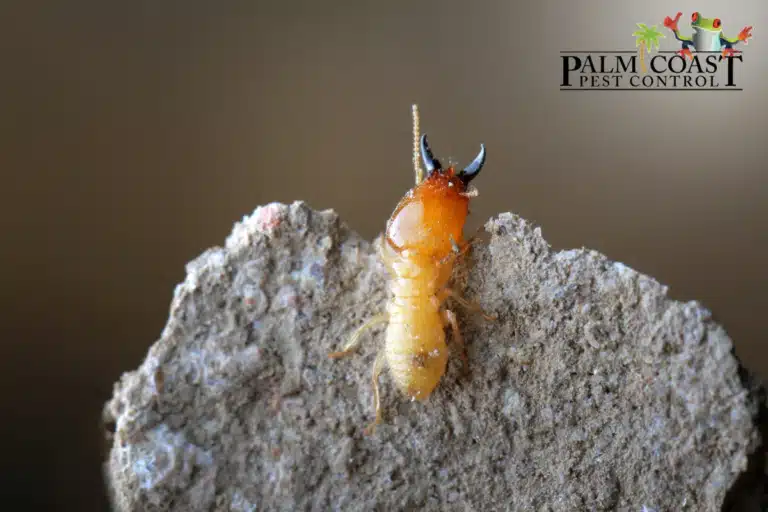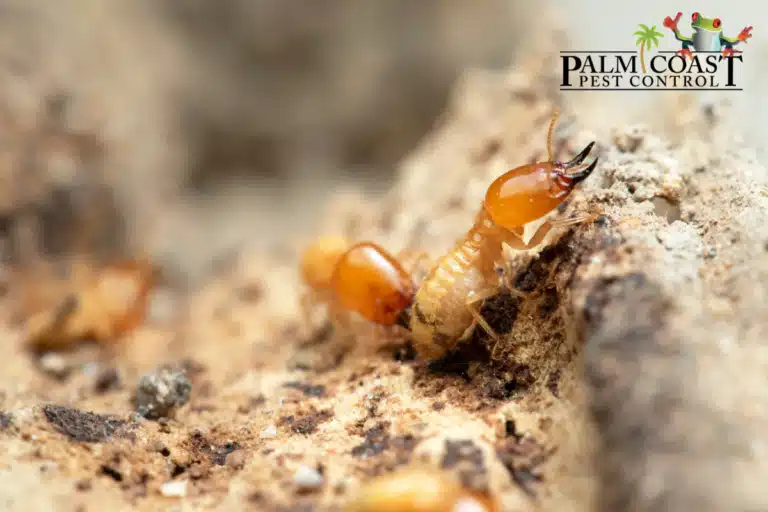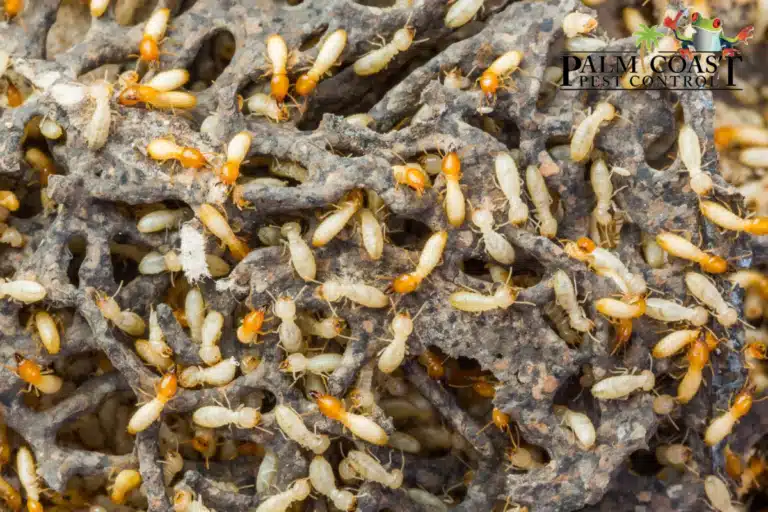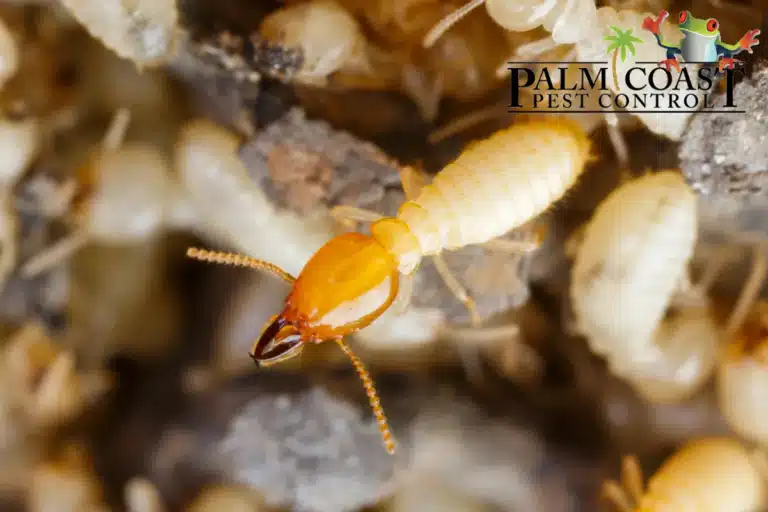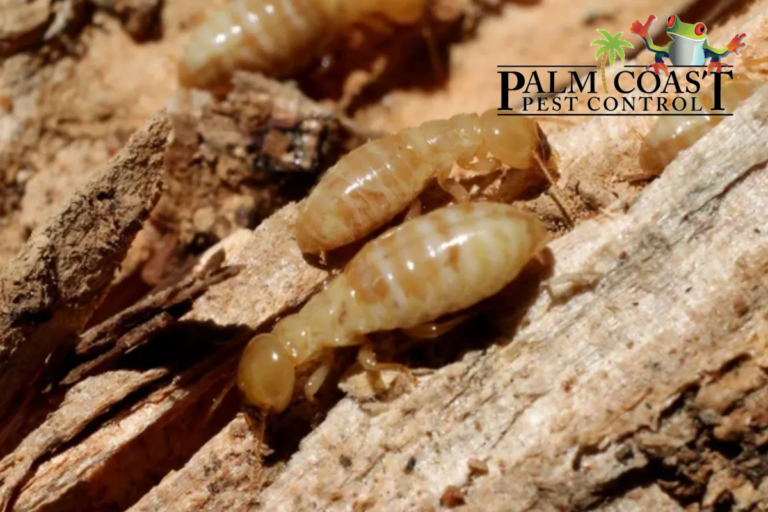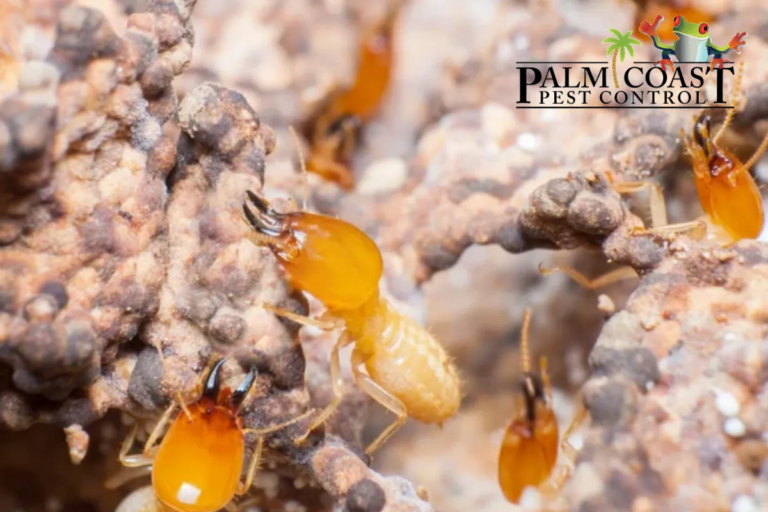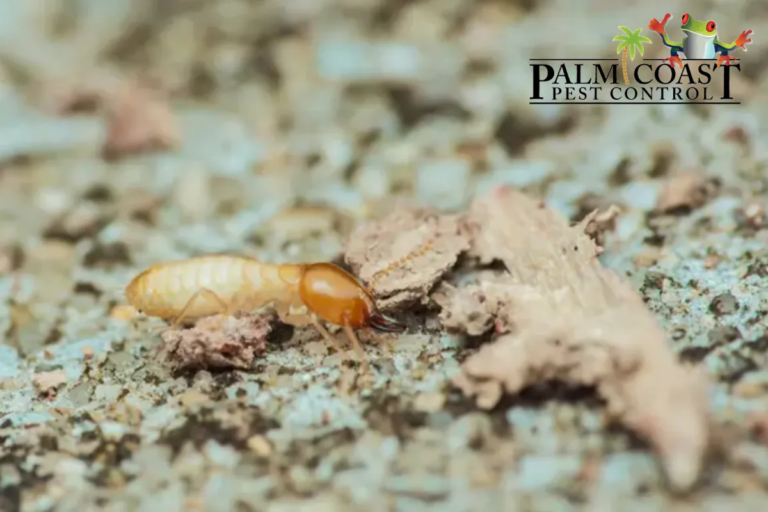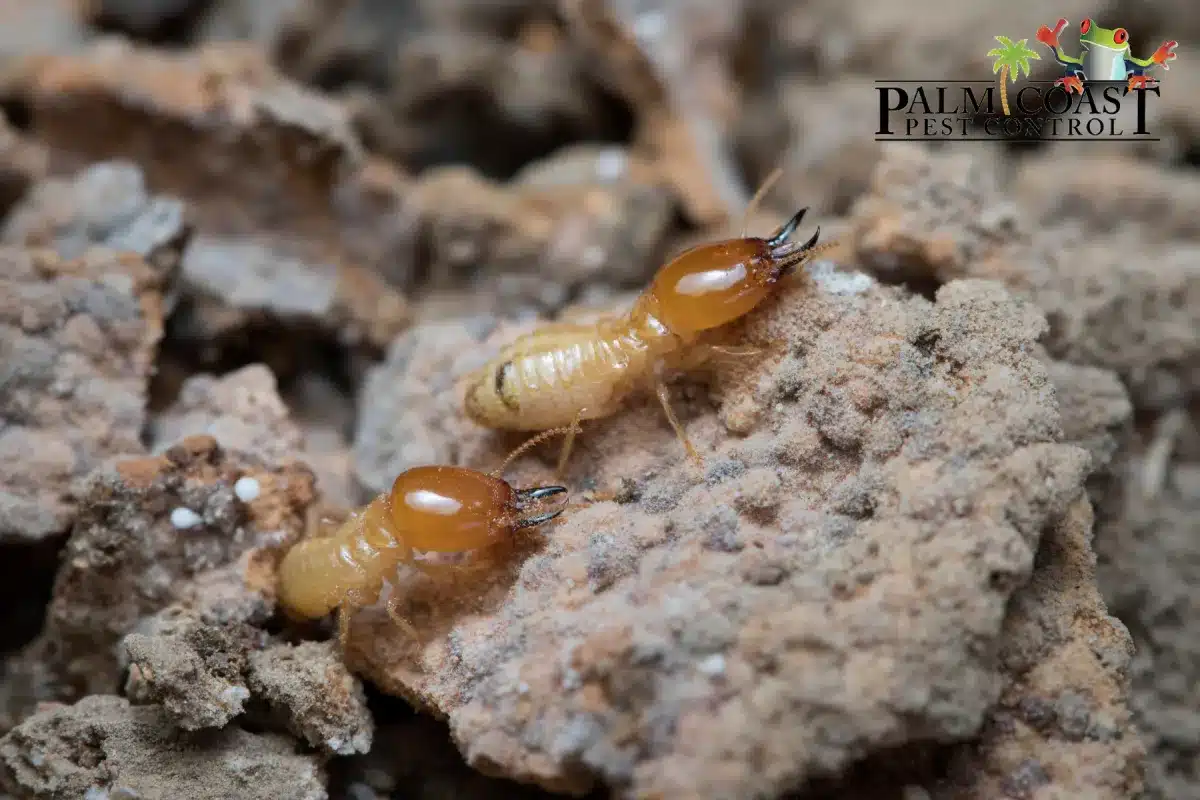
Termite season typically active-swarms from early spring through late summer, usually beginning in March or April as warm temperatures and spring rains trigger reproductive swarming events. However, termites remain active underground and inside wooden structures 365 days a year, continuing to feed on wood fiber continuously regardless of outdoor weather conditions.
Knowing when termites are most active helps homeowners spot early warning signs before severe structural damage occurs. While swarming season is the most visible time of year for subterranean and drywood termites, hidden colonies are working behind your walls every single day. Warm days, high humidity, and spring rains create ideal conditions for reproductive swarmers to take flight and start new colonies near your foundation.
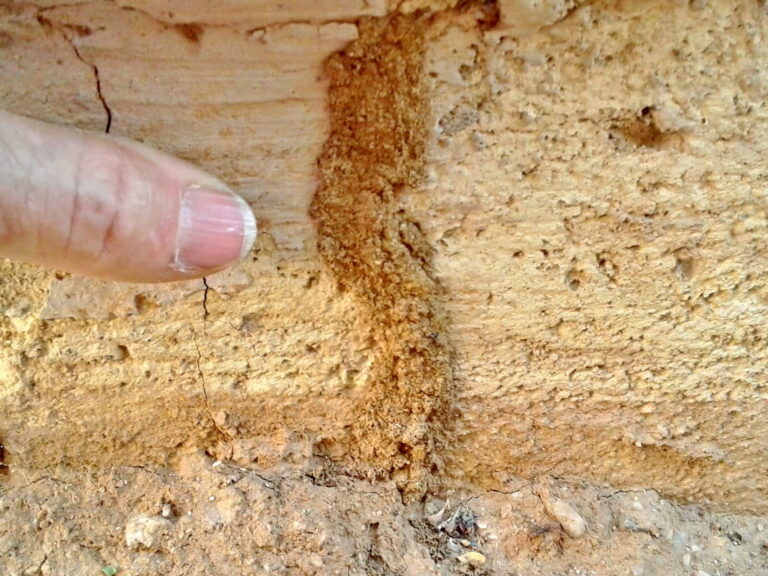
During a recent property audit for a home in Palm City, our technicians discovered active subterranean mud tubes hidden behind a garage wall framing setup. The homeowner had not noticed any flying insects during the previous spring, assuming their property was completely clear. Upgrading their home protection with professional termite control allowed us to stop the hidden activity before it reached the main living area framing.
Different termite species follow distinct biological calendars throughout the year. The matrix below breaks down when each major species swarms, what triggers their flights, and where they typically nest.
| Termite Species | Peak Swarming Season | Primary Environmental Triggers | Geographic High-Risk Zones | Primary Nesting Location |
| Subterranean Termites | March to May (Early Spring) | Warm days (70°F+) immediately following rain | Southern, Mid-Atlantic, & Coastal regions | Deep subterranean soil networks |
| Formosan Termites | May to July (Late Spring / Summer) | Warm, humid evenings after rainstorms | Gulf Coast, Florida, & Southeastern states | Massive underground & aerial nests |
| Drywood Termites | Late Summer to Early Fall (August to October) | Warm temperatures and low humidity days | Coastal South, Southwest, & California | Dry structural timber & attic framing |
| Dampwood Termites | Summer to Autumn | High humidity and heavy moisture environments | Pacific Northwest & Southwest coasts | Decaying logs, stumps, & wet wood |
Understanding these seasonal timelines ensures you know exactly what to look for whether you need routine maintenance or emergency pest control in Palm City, FL.
Termites do not rely on a calendar; instead, they respond directly to specific environmental cues that signal ideal mating conditions.
Recognizing these weather patterns helps property owners stay one step ahead of swarming events each year.
Taking proactive preventive steps before spring arrives drastically reduces the risk of swarmers establishing a nest on your land.
Completing this simple checklist protects your building envelope and simplifies your annual home maintenance routine. If you notice early mud tubes near your foundation, reaching out for pest control in Palm City ensures swift intervention.
At Palm Coast Pest Control, we bring over 35 Years of Local Termite Experience to every home and business we protect. As an experienced, family-owned company, we combine deep technical knowledge with friendly, down-to-earth service. We know that every building has unique structural features, which is why we strictly avoid cookie-cutter treatments.
Instead, our team focuses on smarter termite inspections and treatments, delivering customized, effective solutions built for your exact property. With over 35 Years of Experience serving local communities, we prioritize child- and pet-safe, eco-friendly treatments that deliver complete protection without sacrificing family safety.
Our technicians perform thorough inspections to identify active shelter tubes, entry points, and moisture issues. We then install targeted barrier systems and continuous monitoring stations to keep your building secure through every season. Whether you require immediate relief for an active swarm or ongoing prevention, our services are backed by a 100% satisfaction guarantee: pests don’t come back, or we do. For comprehensive Palm City pest control, our friendly team is always ready to provide rapid relief, including same-day and emergency options.
A widespread myth among property owners is that termites only pose a threat during spring swarming season when winged insects are visible near windows. In reality, swarming is simply the brief reproductive stage where mature colonies release alates to start new nests elsewhere.
Worker termites never sleep and never hibernate. They continue chewing through structural studs, subfloors, and roof trusses 24 hours a day, 365 days a year. Even when outdoor weather turns cool, indoor colonies remain fully active, hidden beneath your floors.
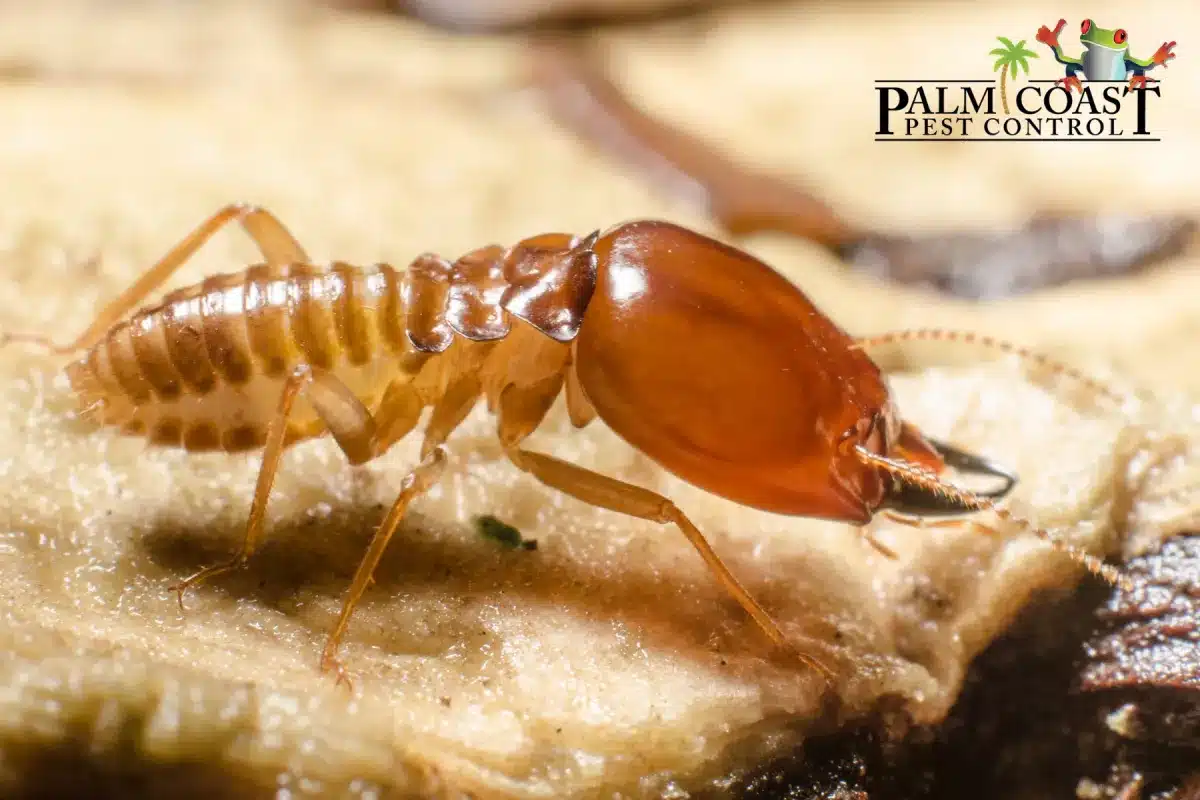
No. Subterranean termites dig deeper into the soil below the frost line to stay warm, while colonies living inside climate-controlled buildings stay fully active all winter long.
Subterranean termites usually swarm on warm spring mornings after rain, while Formosan and drywood species prefer flying during warm, humid evening hours.
Termite swarmers drop four wings that are all identical in size and shape. Flying ants keep their wings, which feature larger front wings and visibly smaller hind wings.
While visible termite swarms peak between early spring and late summer, structural wood damage can occur year-round behind walls. Palm Coast Pest Control helps protect your property with continuous termite protection and annual inspections, giving you peace of mind regardless of the season.
Don’t wait for swarm season to take its toll on your wood structures! Contact us today to schedule your free inspection, claim 10% off your first service, and enjoy complete peace of mind knowing your home is in expert hands.