Have you noticed brown patches spreading across your lawn or wildlife digging up your yard? Grubs could be the problem. These underground pests feed on grass roots, weakening your lawn and making it easy for raccoons and birds to tear up damaged areas. Learning how to identify grubs early and treat them before they mature can help you avoid expensive lawn repairs.
Jupiter’s warm climate, sandy soil, and regular irrigation create excellent conditions for beetles to lay eggs. Once the eggs hatch, young grubs begin feeding on grass roots beneath the soil. Because Florida’s weather supports long periods of beetle activity, grub infestations can develop quickly if left untreated.
If you’re looking for dependable pest control in Jupiter, understanding the grub life cycle is one of the best ways to protect your lawn from long-term damage.
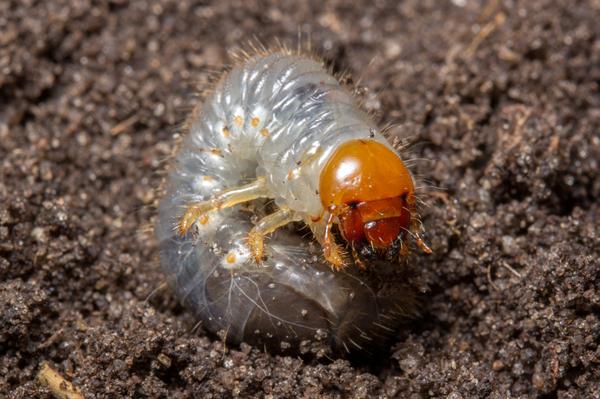
Grubs are white, C-shaped beetle larvae that usually measure about half an inch long. They have soft bodies, brown heads, and six small legs near the front of their bodies. Although they live underground, they can cause significant damage by feeding on the roots that keep your lawn healthy.
Many homeowners ask, are grubs insects? Yes. Grubs are the immature larval stage of several beetle species. While they look very different from adult beetles, they are insects that spend the first part of their life underground before transforming into adults.
Several types of grubs commonly damage residential lawns. Depending on your location, grubs may develop into Japanese beetles, masked chafers, European chafers, June beetles, or other scarab beetles.
Fortunately, homeowners usually don’t need to identify the exact species because most grubs feed on grass roots in similar ways and can be managed using the same treatment principles.
One of the most common questions homeowners ask is what do grubs turn into?
After feeding underground for several months, grubs pupate in the soil before emerging as adult beetles. Depending on the species, they may become Japanese beetles, June beetles, European chafers, or masked chafers. Once adults emerge, they feed, mate, and lay new eggs in the soil, beginning the cycle again.
Although grubs are best known for damaging lawns, common garden grubs may also be found beneath flower beds, vegetable gardens, and landscaped areas. Their feeding weakens plant roots, making plants more vulnerable to drought, heat stress, and other environmental conditions.
Healthy lawns and gardens are generally better able to recover from minor grub activity, but larger populations can cause noticeable damage in a relatively short period.
Many homeowners wonder, do beetles eat grass?
Most adult beetles do not feed on turfgrass. Instead, many species feed on flowers, ornamental plants, shrubs, or tree leaves. It’s the grub stage that causes the greatest damage to lawns by feeding below the soil surface on grass roots.
This is why controlling grubs before they mature is often more effective than trying to manage adult beetles later.
Because grubs remain hidden underground, homeowners usually notice lawn damage before they see the pests themselves.
Common signs include brown or thinning patches of grass that don’t improve with watering, turf that pulls away from the soil easily because the roots have been eaten, and increased activity from raccoons, birds, armadillos, or other wildlife searching for food. If you dig into damaged areas and find more than ten grubs per square foot, it’s a strong indication that treatment may be needed.
If you’ve noticed raccoons or birds tearing up your yard, they’re usually not interested in your grass—they’re searching for grubs.
As grub populations increase, they become an easy food source for raccoons, skunks, armadillos, crows, and other wildlife. Unfortunately, these animals often cause additional damage while digging through the turf to reach the larvae.
Grass roots absorb water and nutrients needed to keep your lawn healthy. As grubs feed on these roots, the grass becomes weaker and less able to survive hot, dry conditions.
Initially, damage may appear as small brown patches. As feeding continues, affected areas expand, and the turf may become soft enough to roll back like a loose carpet because the roots have been destroyed.
Timing is one of the biggest factors in successful grub control.
Preventative treatments are generally most effective before young grubs become established and begin causing serious root damage. Once large, mature grubs have already fed extensively, recovery becomes more difficult and may require additional lawn care.
Regular inspections throughout the growing season can help identify problems before widespread damage occurs.
Many store-bought products provide disappointing results because they’re applied too late or after extensive damage has already occurred.
Grubs remain hidden underground, making them difficult to detect without careful inspection. Applying products at the wrong time or treating only damaged areas often allows the life cycle to continue.
Professional inspections help determine whether grubs are actually responsible for the damage and whether treatment is necessary.
Professional grub management begins with a thorough lawn inspection. An experienced technician looks for signs of root damage, evaluates grub activity, and determines whether treatment is appropriate.
If grubs are confirmed, a customized treatment plan can help reduce current populations while protecting the lawn from future infestations. Continued monitoring also helps identify new activity before it becomes a larger problem.
For homeowners looking for dependable Jupiter pest control, early detection and timely treatment can make a significant difference in protecting the health of your lawn.
Keeping your lawn healthy is one of the best ways to reduce the impact of grubs. Regular mowing, proper watering, and routine lawn inspections can help you spot early signs of damage before they become severe. Monitoring beetle activity during the summer and addressing potential infestations promptly can also help interrupt the life cycle before grubs have a chance to establish themselves.
Yes. Grubs are the immature larval stage of several beetle species.
They develop into adult beetles such as Japanese beetles, June beetles, European chafers, and masked chafers.
Most adult beetles feed on plants rather than turfgrass. The grub stage causes lawn damage by feeding on grass roots.
Finding more than ten grubs per square foot is often considered a sign that treatment may be needed.
Yes. If the damage is caught early and the grubs are controlled, many lawns can recover with proper care.
Grubs may be hidden beneath the surface, but the damage they cause can quickly become impossible to ignore. If you’ve noticed brown patches, thinning grass, or wildlife digging up your lawn, it’s a good idea to have your property inspected before the problem spreads. Early treatment can help protect your lawn’s root system and prevent more expensive repairs later.
At Palm Coast Pest Control, we’ve been helping homeowners protect their lawns for more than 35 years. As a family-owned company, we believe in honest inspections, proven treatment methods, and child- and pet-friendly solutions that deliver lasting results.
Whether you need dependable pest control in Jupiter, FL, our experienced technicians will inspect your lawn, identify the source of the damage, and recommend a treatment plan tailored to your property.
Contact us today and ask about our 10% discount for first-time customers. With same-day and emergency service available, Palm Coast Pest Control provides trusted Jupiter pest control backed by our 100% satisfaction guarantee. If the pests come back, so do we.
Learn more here: