Have you noticed large grasshoppers hopping through your yard or feeding on your plants? While seeing one or two grasshoppers isn’t unusual, large populations can quickly damage flowers, vegetable gardens, shrubs, and ornamental plants. In Jupiter, Florida, the warm climate allows grasshoppers to remain active for much of the year, making early identification and prevention important for protecting your landscape.
Among the most common species homeowners encounter is the Eastern Lubber Grasshopper. These oversized grasshoppers are easy to recognize and can consume a surprising amount of plant material in a short time. Learning why they appear, what attracts them, and how to manage them can help you prevent costly landscape damage.
Jupiter’s subtropical climate creates ideal conditions for grasshoppers. Warm temperatures, seasonal rainfall, and abundant vegetation provide the food and shelter they need to thrive. Residential landscapes filled with flowering plants, vegetable gardens, ornamental shrubs, and lush greenery become attractive feeding grounds throughout much of the year.
Grasshopper populations often increase during the warmer months when plants are actively growing. While a few grasshoppers rarely cause serious problems, larger populations can quickly strip leaves, flowers, and tender new growth from many landscape plants.
If you’re searching for dependable pest control in Jupiter, understanding why grasshoppers are attracted to your property is the first step toward protecting your lawn and landscape.
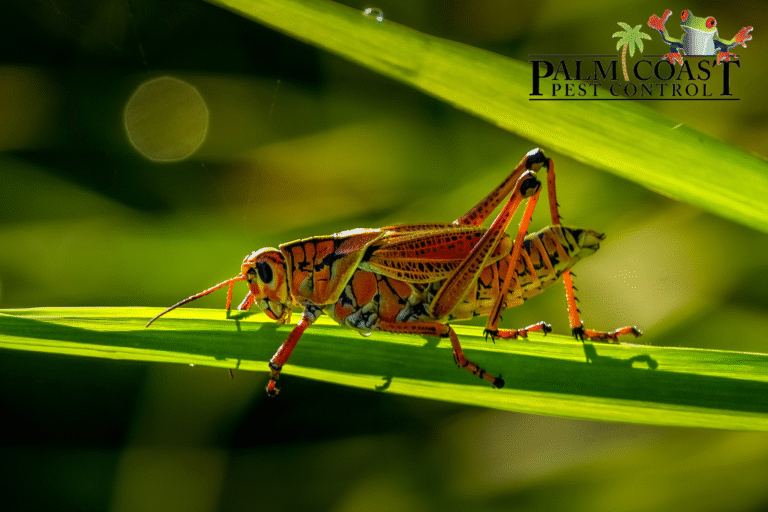
The Eastern Lubber Grasshopper is one of the largest grasshopper species found in Florida. Adults often grow between 2 and 3 inches long, making them much larger than the common grasshoppers many people are familiar with.
They have thick bodies with striking combinations of black, yellow, orange, and sometimes red markings. Unlike many grasshopper species that fly long distances, Eastern Lubber Grasshoppers usually walk or make short hops between plants while feeding.
Their bright colors serve as a warning to predators because they produce defensive chemicals that make them unpleasant to eat.
Many homeowners ask, are grasshoppers invasive?
In Florida, most grasshopper species—including the Eastern Lubber Grasshopper—are native insects, not invasive species. However, that doesn’t mean they can’t become serious pests.
When environmental conditions are favorable, their populations can grow rapidly. Large numbers of grasshoppers feeding together can heavily damage gardens, flower beds, shrubs, and ornamental landscapes, making them a significant nuisance for homeowners.
Eastern Lubber Grasshoppers feed on a wide variety of plants commonly found in Florida landscapes. Some of their favorite food sources include hibiscus, cannas, amaryllis, crinum lilies, vegetable gardens, herbs, flowering annuals, young shrubs, and other tender ornamental plants.
Rather than creating small holes, grasshoppers chew large, irregular sections from leaves. As their numbers increase, they can quickly strip foliage and leave plants looking damaged or skeletonized.
One or two grasshoppers usually aren’t cause for concern. However, if you begin seeing large grasshoppers throughout your yard, ragged holes in leaves, missing flower petals, chewed vegetables, or damage spreading rapidly from one plant to another, your landscape may have a growing infestation. Homeowners often notice grasshoppers jumping away with nearly every step they take through the lawn. Identifying these signs early can help prevent more extensive plant damage.
Grasshoppers are naturally attracted to landscapes that provide plenty of food and shelter. Flower beds, vegetable gardens, healthy ornamental plants, overgrown weeds, sunny open areas, and dense landscaping all create inviting environments where grasshoppers can feed and reproduce. While you can’t eliminate every attraction, keeping weeds under control and routinely inspecting your landscape can make your property less appealing to large populations.
If you’re wondering how to get rid of lubber grasshopper populations, the key is to act before they become widespread. Regularly inspect your landscape, remove young grasshoppers when possible, keep weeds under control, and pay close attention to vulnerable ornamental plants and vegetable gardens. Encouraging natural predators may also help reduce activity. Because grasshoppers can easily move between neighboring properties, larger infestations often require professional treatment for long-term control.
Many homeowners try removing grasshoppers by hand or using store-bought products. While these methods may temporarily reduce the number of visible insects, they rarely eliminate the underlying problem. Grasshopper eggs remain protected in the soil, new adults can migrate from nearby properties, and additional generations continue hatching throughout the season. Without addressing the source of the infestation, populations often return, making a more comprehensive management strategy the most effective long-term solution.
Yes. Raccoons are opportunistic omnivores and will occasionally eat grasshoppers along with insects, fruits, nuts, eggs, and other small animals. However, they shouldn’t be considered a reliable form of grasshopper control because insects make up only a small portion of their diet.
Several other animals are more consistent predators of grasshoppers, including birds, frogs, lizards, spiders, and certain beneficial insects. While these natural predators can help keep populations in check, they rarely eliminate an established infestation on their own.
In Jupiter, grasshoppers are most active from late spring through early fall when warm temperatures and plentiful vegetation provide ideal feeding conditions. During these months, homeowners may notice increasing numbers in flower beds, vegetable gardens, and landscaped areas.
Activity often increases after periods of rainfall because healthy plant growth provides an abundant food source. Regularly inspecting your landscape during the growing season can help you catch problems before they become widespread.
Grasshoppers typically prefer broadleaf plants, flowers, vegetables, and ornamental shrubs over turfgrass. However, when populations become unusually large or food becomes scarce, they may also feed on young grass and newly installed sod.
Most of the damage occurs in landscape beds and gardens, where they chew irregular holes in leaves and flowers. Severe infestations can reduce a plant’s ability to grow, flower, and remain healthy throughout the season.
While a few grasshoppers can often be managed through regular landscape maintenance, larger infestations usually require a more thorough approach. Professional treatment begins with a careful inspection to identify the grasshopper species, evaluate plant damage, and determine why the property is attracting them.
After the inspection, a customized treatment plan may be recommended based on the severity of the infestation and the type of plants being affected. Ongoing monitoring and preventative recommendations help reduce the chances of future outbreaks while protecting the overall health of your landscape.
For homeowners looking for dependable Jupiter pest control, early intervention can prevent grasshopper populations from causing more extensive damage to lawns, gardens, and ornamental plants.
Preventing grasshopper damage starts with making your landscape less attractive to these hungry insects. Regularly mowing your lawn, removing excessive weeds, and inspecting plants for early signs of feeding can help reduce the likelihood of large populations becoming established.
It’s also a good idea to monitor newly planted flowers and shrubs since tender growth is especially attractive to grasshoppers. Addressing problems early is usually much easier than trying to control a widespread infestation later in the season.
Jupiter’s warm climate, seasonal rainfall, and nearly year-round plant growth create ideal conditions for grasshoppers to feed, reproduce, and remain active for much of the year.
Eastern Lubber Grasshoppers are not poisonous to people or pets. They produce defensive chemicals that discourage predators, but they do not bite, sting, or inject venom.
The best results come from identifying populations early and using a combination of landscape maintenance and targeted treatments. Large infestations are often easier to manage with professional assistance.
Yes. Grasshoppers can migrate from nearby properties or hatch from eggs already present in the soil. Ongoing monitoring and preventative measures help reduce the risk of future infestations.
If you’re seeing widespread feeding damage or grasshopper populations continue increasing despite your efforts, a professional inspection can identify the source of the problem and recommend the most effective long-term solution.
A few grasshoppers in your yard may not seem like a big problem, but growing populations can quickly damage flowers, vegetable gardens, shrubs, and ornamental plants. Taking action early is the best way to protect your landscape before the damage becomes more difficult and expensive to manage.
If you’ve noticed large grasshoppers feeding on your plants or seeing more of them around your property, Palm Coast Pest Control is here to help. For more than 35 years, our family-owned team has provided trusted solutions, using proven treatment methods that are effective while remaining child- and pet-friendly. We take the time to inspect your property, explain what we’re seeing, and recommend honest solutions that fit your needs without pressure or hidden fees.
Whether you’re dealing with Eastern Lubber Grasshoppers or other outdoor pests, we offer complete pest control in Jupiter, FL to help protect your lawn, landscape, and home throughout the year. Our experienced technicians understand Florida’s unique pest challenges and create customized treatment plans designed for long-term results.
Schedule your FREE inspection today, request a no-obligation quote, and ask about our 10% discount for first-time customers. With same-day and emergency service available, Palm Coast Pest Control makes it easy to get dependable Jupiter pest control backed by our 100% satisfaction guarantee. If the pests come back, so do we.
Other related blogs;