Have you noticed white, cotton-like spots on your plants or sticky leaves that seem to attract ants? You may be dealing with mealybugs. These tiny sap-feeding insects can weaken ornamental plants, gardens, and houseplants if left untreated. The good news is that early identification and proper treatment can help prevent serious damage and keep your plants healthy.
Jupiter’s warm, humid climate creates ideal conditions for many plant pests, including mealybugs. These insects thrive throughout much of the year on ornamental plants, tropical landscaping, fruit trees, greenhouse plants, and indoor houseplants.
Because they reproduce quickly and often remain hidden beneath leaves or in protected parts of the plant, homeowners may not notice an infestation until leaves begin yellowing or sticky honeydew appears.
If you’re looking for dependable pest control in Jupiter, understanding how mealybugs spread is the first step toward protecting your landscape.
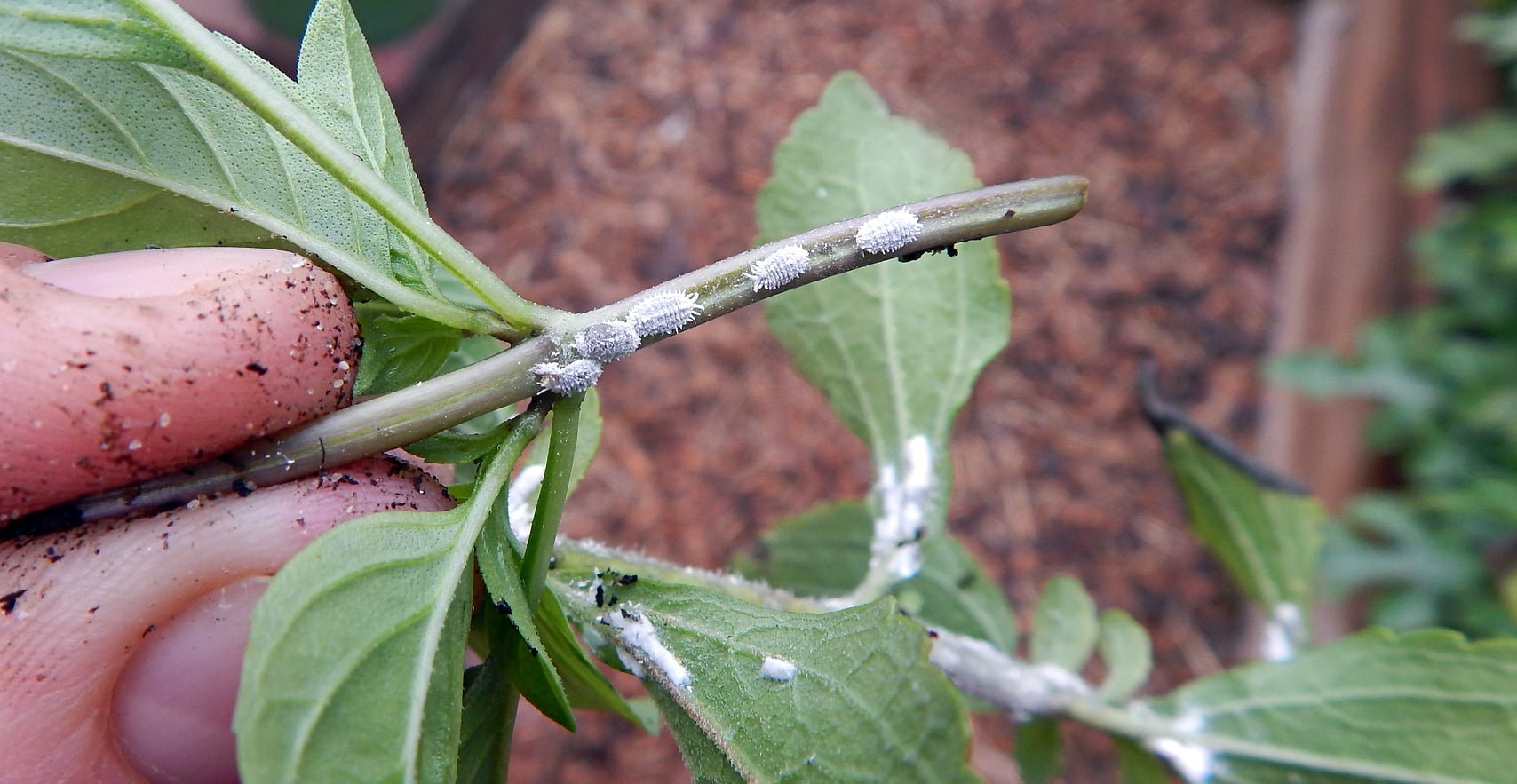
Mealybugs are small, soft-bodied insects covered with a white, waxy coating that gives them a cotton-like appearance. Adult females are oval-shaped, wingless, and typically grow to about one-quarter inch long. They feed by inserting their mouthparts into leaves, stems, and other plant tissues to remove nutrient-rich sap.
Unlike insects that chew leaves, mealybugs weaken plants from the inside by removing the nutrients they need to grow and stay healthy.
Infestations often begin when an already infested plant is introduced into a home, garden, or landscape. Mealybugs may also spread on contaminated pots, gardening tools, or through close contact between neighboring plants.
Female mealybugs lay between 300 and 600 eggs inside a white cotton-like egg mass, usually on the undersides of leaves or in protected crevices. Within one to three weeks, tiny yellow nymphs, often called crawlers, hatch and move across the plant looking for new feeding sites. As they mature, they develop the familiar white waxy coating that protects them from drying out and some natural enemies.
Because populations grow rapidly, a small infestation can become widespread before it’s noticed.
As mealybugs feed, they remove sap that plants need for healthy growth. Over time, this can cause yellowing leaves, curling foliage, slowed growth, premature leaf drop, and reduced flowering or fruit production.
While feeding, mealybugs also produce a sticky substance called honeydew. This sugary residue coats leaves and encourages black sooty mold to develop. Honeydew frequently attracts ants, which may protect mealybugs from natural predators in exchange for feeding on the sugary liquid.
Heavy infestations can weaken plants enough to make them more vulnerable to other environmental stresses.
They usually appear as small white cottony clusters along stems, leaf joints, and the undersides of leaves. Their waxy coating makes them look like bits of cotton rather than insects.
However, not every white spot indicates mealybugs. Powdery mildew, mineral deposits, and other plant diseases can create similar symptoms. A close inspection often reveals whether you’re looking at individual insects or a fungal problem.
Although mealybugs are most often found above the soil feeding on stems and leaves, some closely related species known as root mealybugs live beneath the soil and feed on plant roots.
Other insects commonly found in potting soil include fungus gnats, springtails, and soil mites. Since different pests require different treatments, identifying the insect correctly is important before applying any products.
Mealybugs usually become noticeable only after their population begins increasing.
Common signs include white cotton-like masses on leaves and stems, sticky honeydew covering plant surfaces, black sooty mold growing on leaves, yellowing foliage, curling leaves, slow plant growth, and increased ant activity around affected plants.
Regular inspections allow homeowners to catch infestations before serious damage occurs.
One of the biggest challenges with mealybugs is how quickly they reproduce. Since females lay hundreds of eggs, populations can expand rapidly if left untreated.
Early intervention helps prevent widespread feeding damage while reducing the chances of honeydew, sooty mold, and secondary pest problems developing throughout your landscape. If the infestation continues to spread, working with a trusted Jupiter pest control professional can help protect your plants before more extensive damage occurs.
Keeping plants healthy is one of the best ways to reduce the risk of mealybug infestations. Regularly inspect the undersides of leaves, stems, and new growth where these insects like to hide. When bringing home new plants, keep them separate from your existing collection for a short period so you can check for pests before placing them nearby.
It’s also helpful to remove heavily infested leaves or stems when practical and avoid overfertilizing plants, as excessive new growth can attract sap-feeding insects like mealybugs. Routine monitoring allows you to catch problems while they’re still manageable.
While small infestations can sometimes be managed early, larger outbreaks often require professional attention. A thorough inspection helps determine the extent of the infestation, identify the affected plants, and rule out other problems that may produce similar symptoms.
An experienced technician can recommend targeted treatments that address mealybugs while helping protect the health of your ornamental plants, shrubs, and landscape. Continued monitoring also helps prevent future infestations from becoming established.
No. Mealybugs don’t bite, sting, or spread diseases to people or pets. Their damage is limited to plants, where they feed on sap and weaken healthy growth.
Yes. Young mealybugs, known as crawlers, can move from one plant to another. Infested plants placed close together allow populations to spread quickly throughout a landscape or indoor plant collection.
Ants are attracted to the sticky honeydew produced by mealybugs. In many cases, large numbers of ants on a plant may indicate that sap-feeding insects are present.
Many plants recover well when infestations are identified early and treated properly. Severely weakened plants may require additional care, including proper watering, pruning, and fertilization, to encourage healthy new growth.
If mealybugs continue returning, the infestation has spread to several plants, or your landscape is showing significant decline, a professional inspection can help identify the source of the problem and recommend the most effective treatment plan.
Mealybugs may be small, but they can quickly weaken healthy plants if left untreated. The sooner you identify an infestation, the easier it is to protect your landscape, ornamentals, and houseplants from long-term damage.
At Palm Coast Pest Control, we’ve spent more than 35 years helping homeowners protect their landscapes with honest inspections, proven treatment methods, and child- and pet-friendly solutions. As a family-owned company, we understand the unique pest challenges Florida homeowners face and take the time to recommend solutions tailored to your property’s needs.
Whether you’re looking for dependable pest control in Jupiter, FL, our experienced technicians can identify mealybugs and other plant pests before they cause more serious damage. We also provide comprehensive pest, termite, rodent, wildlife, lawn, and ornamental care, giving you one trusted team for all your pest management needs.
Contact us today and ask about our 10% discount for first-time customers. With same-day and emergency service available, Palm Coast Pest Control delivers trusted solutions backed by our 100% satisfaction guarantee. If the pests come back, so do we—so you can enjoy healthy, beautiful plants with complete peace of mind.